7 фактов о групповом этапе VALORANT Champions Shanghai для понимания меты
Need articles like this for your video? They help promote it on YouTube and Google — order them in the Telegram bot @sat_sit_bot. The bot writes and publishes the articles itself (with your YouTube video embedded) on popular topical websites (no ads). Free trial — 50 articles.
· based on the channel VALORANT Champions Tour
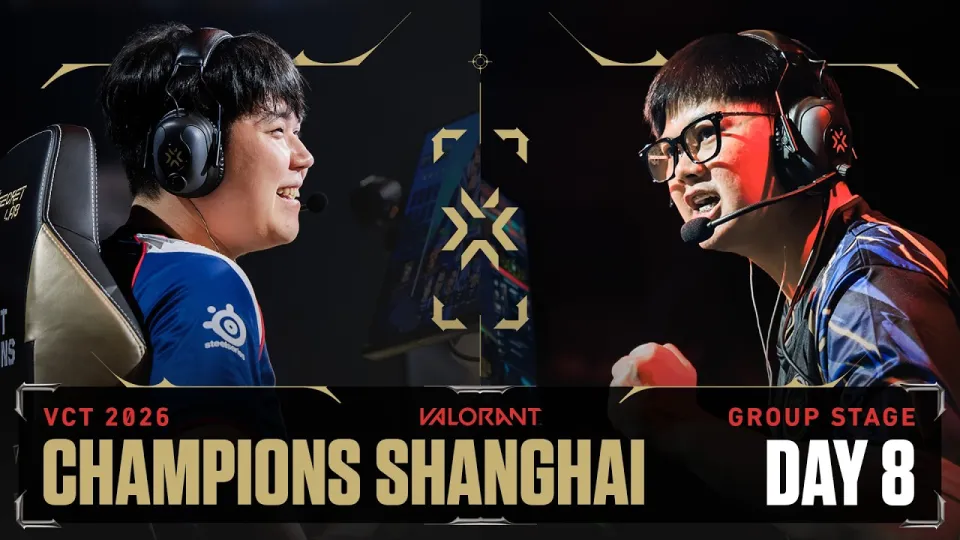
VALORANT Champions Shanghai is the 2026 world championship, and its group stage cut 16 teams from Americas, CN, EMEA and Pacific down to the playoff bracket. The headline takeaway is simple: the host region's four representatives, including JD Gaming, were all eliminated before the playoffs, while T1 survived a three-map series that swung on a single blown lead. For live updates and official announcements, follow VALORANT Esports on X.
What the VALORANT Champions Shanghai group stage actually decided
The group stage is the filter that turns a 16-team international field into a playoff bracket, and in Shanghai it did that job brutally fast. Teams arrived with different levels of international reps: some had deep Masters runs behind them, others were riding regional form into their first real global test. The format rewards consistency across multiple maps rather than one hot server, so rosters that leaned on a single comfort pick or one star duelist ran out of runway.
The most visible result was regional. All four CN teams were knocked out, which turned a home-crowd event into a neutral-arena playoff for the local fans. That outcome matters beyond bragging rights: it reshapes how analysts value CN slots, how teams approach the off-season, and how much pressure sits on the region heading into the next international cycle.
Why JD Gaming's 6-11 collapse against T1 mattered
JD Gaming had a genuine path to a 2-0 over T1 and let it slip on map one. Leading 6-11, they lost the map, then lost the series in three games. On a global stage, holding that kind of lead against a top-tier opponent is exactly the kind of result that changes a region's reputation, and JDG couldn't close it.
Break the collapse down and it's rarely one thing:
- Economy mismanagement after winning rounds, gifting the opponent a cheap bonus conversion.
- Passive post-plant setups that let T1 retake sites with utility still in the bank.
- A stalled attack half where JDG stopped taking map control and defaulted into late-round duels.
- Mental reset issues, visible in the third map where the series slipped away quickly.
Fans were blunt about it: the third map was the weakest JDG looked all event, and the missed 2-0 is the sort of result that lingers into the next season.
T1's role swap and the Crown silence
T1's decision to put a flex player on duelist duty raised eyebrows in chat and on the desk. It's a real strategic gamble: moving a player whose value comes from utility timing and mid-round calling into the entry role changes how the whole team takes space. When it works, you get a duelist who understands the macro game; when it doesn't, you get a star player dying first with no trade.
Against JDG it worked well enough to win the series. The other talking point was the Crown being silenced, which viewers called the most satisfying moment of the broadcast. Silencing an enemy Crown removes the ultimate that anchors a site hold, so it flips a defended position into a vulnerable one. It's a small utility detail that decides rounds at this level, and it's why coaches drill Crown timings so heavily.
The 'regional curse' argument and what it gets wrong
The 'regional curse' framing says host regions underperform because of pressure, but Shanghai doesn't fit that neatly. CN teams weren't undone by the crowd; they were undone by execution against opponents who had sharper mid-round calls and cleaner utility usage. Playing at home is a comfort, not a handicap, and the teams that lost simply weren't ready for the level of the field.
The more useful read is structural. Regions that send multiple teams get more international reps, and reps compound. When a region's slots are handed out and then converted into early exits, the gap widens rather than closes, and the argument that those slots should be merged back into a broader APAC pool gains traction. That's a format debate, not a talent debate, and it will follow the CN region into the next cycle.
Production, pauses and the details viewers noticed
The broadcast itself became part of the conversation. Viewers compared the venue atmosphere to a library, noting how quiet the arena sounded during key rounds, and a lengthy technical pause split the action in the middle of the day's schedule. Tech pauses are routine at international events, but they break momentum for players and viewers alike, and the desk has to fill that dead air.
Smaller moments got picked apart too, from utility lineups being learned live on stream to a widely debated hit registration clip where viewers counted fewer damage indicators than expected. Hit registration complaints are as old as tactical shooters, and they usually come down to spectator-client interpolation rather than the server itself, but they reliably dominate chat during close rounds.
How to read a VOD like this one
If you're watching the full day-eight broadcast rather than highlights, treat it as a study session instead of entertainment. The value is in the round-by-round economy, not the frag count.
- Watch the buy phase first: note who forces, who saves, and how that decision cascades two rounds later.
- Track the Crown and other anchoring ultimates: who has them, when they're used, and whether they're baited out cheaply.
- Pause on post-plant setups and ask where the retake utility comes from.
- Follow one player's minimap position for a full half to see how space is actually taken.
- Skip the tech pauses and the filler segments on a second watch.
Doing this on a single series teaches more about VALORANT than skimming ten highlight reels, because you see the mistakes that never make the montage.
Useful links
- Official VALORANT Esports updates on X: https://x.com/valorantesports
- Facebook: https://www.facebook.com/ValorantEsports/
- Instagram: https://www.instagram.com/valorantesports/
- TikTok: https://www.tiktok.com/@valorantesports
- Twitch: https://www.twitch.tv/valorant
Final thoughts on the Shanghai group stage
The group stage in Shanghai delivered exactly what a world championship should: a host region under maximum pressure, a favorite nearly stumbling, and a playoff bracket nobody predicted cleanly. JD Gaming's blown 6-11 lead against T1 is the moment that will define their tournament, while T1's role gamble paid off and kept them alive. The 'regional curse' debate will keep running, but the evidence points to execution gaps rather than home-crowd nerves. For the full day-eight broadcast and the rest of the event, the VALORANT Champions Tour channel is the source to follow, and VALORANT Esports on X posts schedules, results and bracket updates as they happen.
Key takeaways
- VALORANT Champions Shanghai runs September 24 to October 18 with 16 teams from Americas, CN, EMEA and Pacific.
- All four Chinese representatives were eliminated during the group stage, ending the host region's run early.
- JD Gaming lost a 6-11 lead on map one against T1, a throwback that cost them a realistic 2-0 series.
- Fans flagged the Crown being silenced as the most satisfying moment of the broadcast.
- T1 moved a flex player onto duelist duty, a role swap that shaped their series against JDG.
Questions & answers
Why were all the Chinese teams eliminated in the VALORANT Champions Shanghai group stage?
The CN representatives lost on execution rather than atmosphere. They struggled with mid-round calling, utility usage and closing out leads, and JD Gaming's blown 6-11 advantage against T1 is the clearest example. Playing at home didn't create the losses; the level of the international field did.
What does it mean when a Crown gets silenced in VALORANT?
Silencing the Crown removes the ultimate that anchors a defensive hold, so the site becomes much harder to keep. Viewers called it the most satisfying moment of the broadcast because it directly flipped a round. It's a utility timing detail that separates top teams from the rest.
Was putting a flex player on duelist for T1 a mistake?
It looked risky because it moves a macro-minded player into the entry role, where dying first is common. Against JD Gaming it worked well enough to win the series in three maps. The trade-off is real: you gain game sense in the entry slot but lose utility timing elsewhere.
Is the 'regional curse' real for host regions at international VALORANT events?
It's mostly a narrative. Home crowds add comfort, not a handicap, and the Shanghai results point to execution gaps instead. The more practical issue is structural: regions with more international reps improve faster, so early exits widen the gap rather than close it.
Source: VALORANT Champions Shanghai — Group Stage — Day 8 · Markdown version